
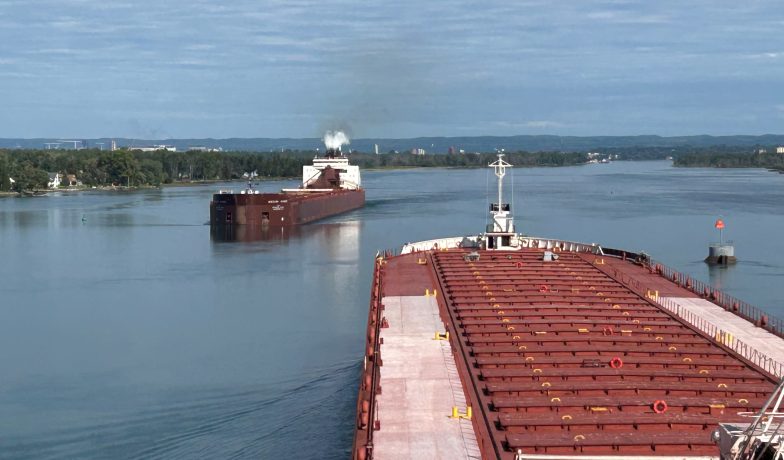

Winding Down
The holidays traditionally bring warmth, reflection and celebration. Yet this year, the mood is tempered by uncertainty. The U.S. government shutdown, the longest in history at 43 days, has disrupted everything from trade data releases to federal agency operations. The Bureau of Labor Statistics, Census Bureau and USDA paused key reports, leaving exporters, analysts and policymakers flying blind. Without reliable data, market participants face diminished confidence and impaired decision-making.
Economic Powerhouse
Trade policies that once seemed distant policy debates have become immediate threats to livelihoods along the lakeshore. Supply chains, the invisible arteries pumping $36 billion annually into the regional economy through maritime shipping, are under strain, not from low water levels or the occasional nor’easter, but from human-made barriers like tariffs and governmental gridlock.
These impediments do not just hike costs; they erode the competitive edge in a global marketplace where reliability is king. In the Great Lakes region, where eight U.S. states and two Canadian provinces ship $135 billion in goods to each other yearly, 40% of all U.S.-Canada trade, the ripple effects hit hard, from Milwaukee’s port to Thunder Bay’s grain elevators. This year, 2025, has delivered plenty of such disruptions, turning what should be a merry wind-down into a nail-biter for industry.
Strains and Impediments
Supply chains are inherently vulnerable to disruption. In the Great Lakes region, impediments like low water levels, ice formation and infrastructure breakdowns are familiar foes. But this year, policy has emerged as a formidable barrier. Tariffs, once tools of targeted enforcement, have become instruments of economic discipline.
President Trump’s 2025 tariff actions have pushed the average effective rate to 17.9%, the highest since 1934. These include:
- 50% tariffs on steel and aluminum
- 25% tariffs on automobiles and parts
- 100% tariffs on branded pharmaceuticals
- 40% penalties on transshipped goods
- Suspension of de minimis exemptions, affecting small shipments
Canada has responded with its own countermeasures. While most tariffs were lifted on September 1, duties remain on U.S. steel, aluminum and autos. Ontario Premier Doug Ford escalated tensions with a $75 million ad campaign quoting Ronald Reagan’s 1987 warning against protectionism: “Trade barriers hurt every American, worker and consumer.” The Reagan Foundation condemned the ad as misleading, and President Trump terminated trade talks in response.
Grain and Soybean Exports
Despite policy headwinds, U.S. grain and soybean exports through the Great Lakes have shown resilience. According to the Federal Grain Inspection Service (FGIS), calendar year exports of U.S. grains and soybeans through November 13 have totaled 508,236 metrics ton through the Great Lakes Seaway, about 23% behind the pace one year ago. Wheat exports are leading the way followed by corn then soybeans. Exports through the Great Lakes-St. Lawrence Seaway are concentrated through the ports of Duluth-Superior and Toledo.
The broader export landscape is clouded by uncertainty. The shutdown delayed USDA’s export sales reports, the Census Bureau’s trade data and tariff volatility has complicated forward contracting. Market access depends not only on physical infrastructure but on intelligence and transparency. When data is scarce and policy erratic, confidence erodes.
Navigating Toward Hope
As the season winds down, stakeholders across the maritime and commodity sectors are left pondering what lies ahead. Will the new year bring clarity and cooperation? Or will trade friction and political gridlock persist?
There is reason for cautious optimism. Sectoral negotiations between the United States and Canada are underway, targeting relief in steel, aluminum and energy. The Carney government in Ottawa has signaled a pragmatic approach, and U.S. Trade Representative Jamieson Greer has expressed willingness to collaborate.
Still, the road to resolution is long. The shutdown’s economic toll—estimated at $11 billion in permanent GDP loss—underscores the cost of dysfunction. And with global markets watching, the credibility of U.S. trade leadership hangs in the balance.
Final Thoughts
The Great Lakes-St. Lawrence Seaway may be closing for the season, but the currents of trade policy continue to swirl. As family and friends gather for the upcoming holidays, let us hope for more than festive cheer. May this season bring the gift of resolution, a thaw in tariff tensions, a reopening of government and a renewed commitment to transparency and cooperation.
Feature image courtesy of the Lake Carriers’ Association

Iron Ore and Limestone Trade Up in July
The Lake Carriers’ Association (LCA) reports that shipments of iron ore on the Great Lakes totaled 5.1 million tons in July, an increase of less than 1% compared to 2025. Iron... Read More
Cargo Volumes Down Despite Increased Vessel Activity on the St. Lawrence Seaway
Cargo volumes on the St. Lawrence Seaway remained below last year’s pace through June, although vessel traffic continued to increase, reflecting a mixed start to the 2026 navigation season. According... Read More