
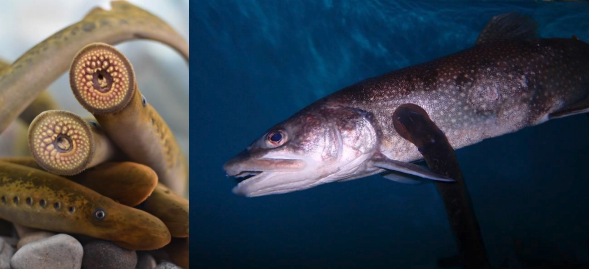

Sea Lamprey Control Initiative Enters Five-year Implementation Phase
The Supplemental Sea Lamprey Control Initiative (SUPCON) has entered a new, five-year implementation phase following several years of successful proof-of-concept research. Funded by the Great Lakes Fishery Commission, SUPCON expands the use of innovative, non-traditional tools to divert, disrupt, and remove invasive sea lampreys from key tributaries across the Great Lakes—supporting efforts to protect native fish and the $5.1 billion fishery they sustain.
Sea lampreys are an invasive, parasitic fish that entered the Great Lakes in the 1920s through shipping canals. A single lamprey can kill up to 40 pounds of fish during its parasitic stage, contributing to dramatic historical declines of native species such as lake trout and whitefish. Traditional control tools—lampricides and barriers—have reduced lamprey populations by 90% in most areas. SUPCON complements these tools by strengthening control in systems where traditional methods face limitations.
Proven Results in Stage One
From 2017 to 2023, SUPCON conducted experimental deployments on four Lake Huron tributaries, reducing or eliminating lamprey reproduction and allowing $400,000 in lampricide treatments to be redirected elsewhere. The initiative tested portable traps for spawning adults, seasonal electrical barriers, and nets that captured more than 1,100 juvenile lampreys—preventing a projected loss of 45,000 pounds of Great Lakes fish.
Researchers also evaluated scent-based tools, including attractant pheromones to funnel lampreys into traps, pheromone blockers to disrupt mate-finding, and alarm cues to steer lampreys into poor habitat. A successful trial of sterile male release in a contained river system resulted in the first-ever cancellation of a scheduled lampricide treatment in the program’s 70-year history.
Stage Two Expands to 13 Tributaries
From 2024 through 2029, SUPCON methods proven effective in stage one are being deployed in 13 tributaries to lakes Superior, Michigan, and Huron. The broader rollout will help control additional populations and evaluate these tools across diverse stream environments. If successful, supplemental control could prevent the production of up to 3 million larvae while conserving program resources.

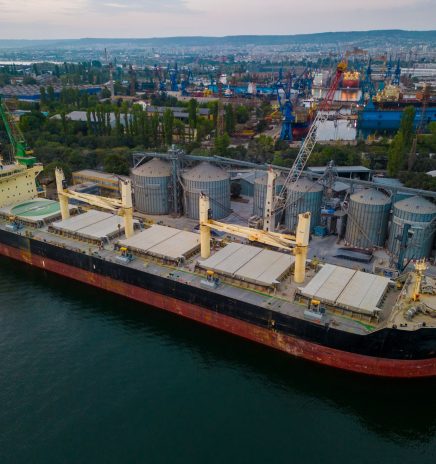
Building the Case for Resilient Great Lakes Ports
Resilience is the ability of organizations, communities, ecosystems and economies to anticipate, absorb or recover from the effects of climate-related hazards. According to the Intergovernmental Panel on Climate Change (IPCC),... Read More
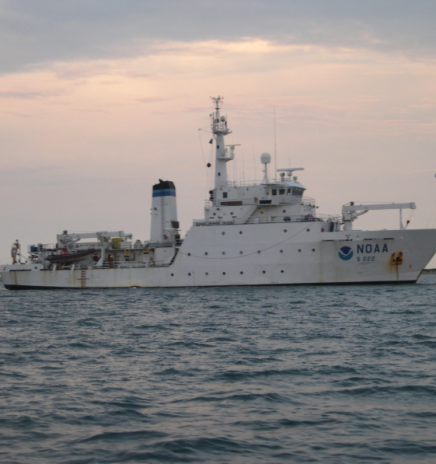
NOAA Begins 2026 Hydrographic Mapping Work on Great Lakes
For the first time since 2022, the National Oceanic and Atmospheric Administration is conducting mapping operations across portions of Lakes Erie, Huron, Michigan and Superior. The NOAA Ship Thomas Jefferson returned to the Great Lakes... Read More