
Engineering the Great Lakes-St. Lawrence Seaway System in a Climate of Contradictions
Adapting to Change
For generations, engineering and design criteria across the Great Lakes–St. Lawrence Seaway system followed a rhythm that was, if not predictable, at least constrained. Winters brought ice, summers brought heat, and the shoulder seasons offered times of transition that allowed operators and engineers to recalibrate and prepare for the oncoming season. That framework is no longer sufficient.
What we are experiencing now is not simply a shift in averages one way or the other. What we are seeing is a widening of the operational envelope. Accordingly, the systems we design must perform through colder cold snaps, warmer seasons, more volatile storms and increasingly erratic water levels, often within the span of a single navigation season.
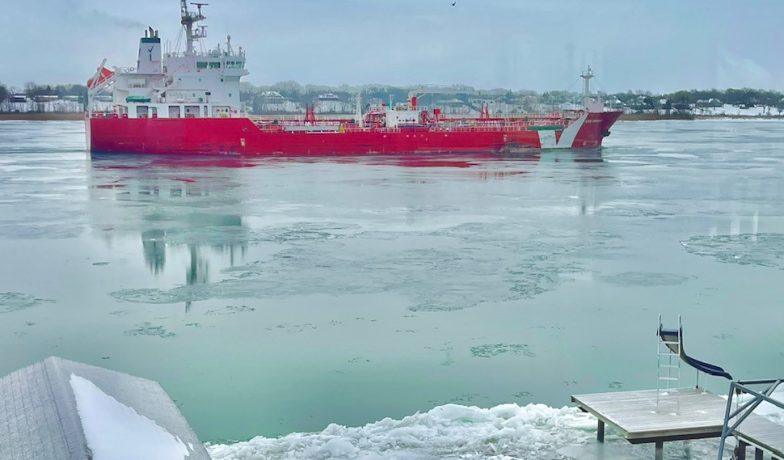
This past winter provided us with a sharp reminder of those extremes. We saw a series of strong storm surges move through with a frequency and intensity we had not seen in recent decades. Unlike the previous year’s relatively low ice cover, this season brought early and sustained freezing conditions that created significant bottlenecks for commercial shipping.
The snowstorms moving across the Lakes, combined with high winds, rapid pressure changes and localized icing, placed simultaneous strain on vessels and their engineering systems, port operations and infrastructure. These were not isolated events, but they compounded operating conditions that tested structural resilience, vessel handling, and real-time decision-making. The result from an engineering perspective was a growing recognition that design assumptions based on historical conditions are no longer sufficient.
At the same time, summer conditions are shifting in the opposite direction. Higher ambient air and water temperatures, along with longer periods of sustained heat, are affecting engine cooling performance, crew operational safety and cargo operations. For certain vessel types, particularly those operating on tight turnaround schedules, heat-related system demands are no longer a secondary consideration; they are becoming a primary factor in design and operation.
Designing for Multiple Conditions
This creates a fundamental engineering challenge: how do we design systems to perform optimally across conditions that are, by their nature, contradictory?
Take hull and structural design as one example. Ice-class considerations have traditionally focused on structural strengthening for impact and abrasion under cold-weather operations. However, those same structural decisions can introduce inefficiencies during open-water operations in warmer months, where fuel performance and hydrodynamic efficiency are important. Designing for one condition can penalize a vessel’s performance in another.
Similarly, propulsion and auxiliary systems are now expected to operate efficiently across a wider range of temperatures and operating conditions. Cooling systems designed for traditional temperature ranges may be pushed to their limits during prolonged heat events. Conversely, systems designed for peak summer conditions must still maintain full range reliability during winter operations, where icing, fluid performance and material brittleness can often come into play.
Water levels present another layer of complexity. The Great Lakes have always experienced variability, but the range and rate of change are increasing. Engineers must now account for both high-water conditions that stress port infrastructure and low-water scenarios that impact vessel drafts, cargo capacities and navigational safety. Designing port and/or terminal infrastructures that can accommodate both extremes without overbuilding or introducing unnecessary costs is a balancing act that requires new approaches and, increasingly, new data, which often doesn’t exist.
And then there is the question of time. The pace of change, both environmental and technological, is compressing the lifecycle assumptions that have historically guided maritime engineering. Infrastructure and vessels designed for 30- or 40-year service lives are now encountering operating conditions that are outside their original design basis. Especially in the Great Lakes system, we also routinely see vessels encroaching on 50+ years of service, which exacerbates the design basis challenges even more. This places a greater emphasis on adaptability—retrofitting, upgrading and extending the useful life of vessels and infrastructure in a way that aligns with evolving environmental and operational realities.
Leading the Charge
In many ways, this is where engineering and design must be leading the charge, not by reacting to individual events, but by reframing how we define performance. It is no longer sufficient to optimize for a single condition or even a narrow range of conditions. We must design for variability itself. This raises an already difficult engineering challenge even higher!
That means building flexibility into systems from the start. It means using data, not just to prove compliance, but to inform real-time decisions and validate long-term performance. It means requiring even closer coordination between vessel designers, operators and infrastructure stakeholders so that solutions work across the system and not in isolation.
It also requires a shift in our overall industry mindset. The maritime industry has long been conditioned to wait—for clearer regulations, for more complete data, for consensus around best practices. Unfortunately, conditions across the Great Lakes–St. Lawrence Seaway system are now evolving faster than that approach can support.
Engineering, maybe especially maritime engineering, has always been about managing constraints. Today, those constraints are no longer fixed. They are dynamic, and they are increasingly unpredictable. The question is no longer whether these conditions are changing. The question is whether we are willing to design for that reality. Designing using the design criteria of the past is no longer an option, and designing for a single “future condition” may be just as limiting.
The work ahead is not about choosing between winter or summer performance. It is about ensuring that vessels and infrastructure can operate reliably across both, often in the same season, sometimes even in the same week. The system we are engineering for today is not the one we inherited, and it will certainly not be the one we leave behind.
Feature photo by Sue Zajac

Building Partnerships Between Great Lakes Ports and Shipyards
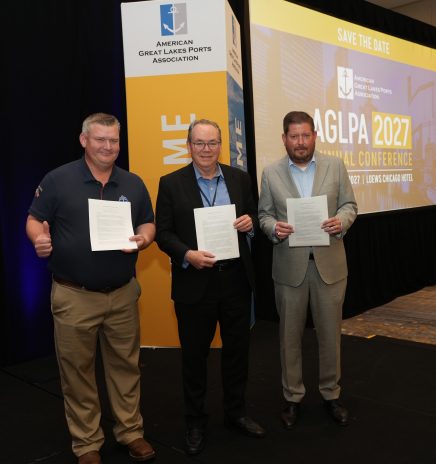
The American Great Lakes Ports Association (AGLPA) and Great Lakes Alliance of Shipyards have signed a memorandum of understanding establishing a formal partnership between the region’s port and shipyard communities. ... Read More
Fraser Industries, HD Hyundai Outline Plan to Modernize U.S. Shipyard Operations
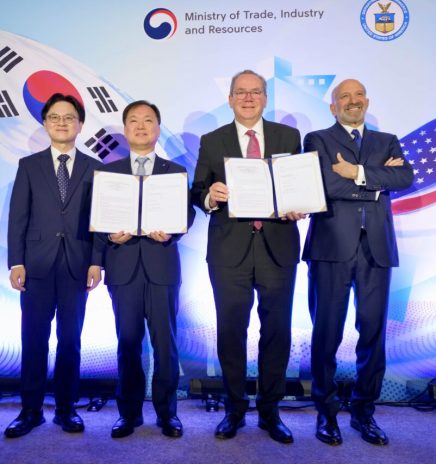
Fraser Industries LLC has signed a memorandum of understanding (MOU) with HD Korea Shipbuilding & Offshore Engineering (HD KSOE) to collaborate on modernizing U.S. shipyards, with Fraser Shipyards in Superior, Wisconsin, expected... Read More