


Canada’s Retaliatory Tariffs on U.S. Goods Take Effect
The Canadian government suspended trade negotiations with the United States in late August and announced the new tariffs and $7.5 billion in support measures. The government said negotiations were suspended after the United States proposed new terms that Canada determined were not in its best interest. Canada said it would not accept an agreement it believes would undermine Canadian workers, businesses and strategic sectors.
The United States imposed a 50% tariff on $27.6 billion USD worth of Canadian that went into effect on Aug. 22. Canada responded with the additional tariffs on imported U.S. products, matching the U.S. rates on a dollar-for-dollar, rate-for-rate basis.
Targeted sectors include steel, dairy, appliances, agricultural equipment, pulp and paper and electronics.
In response to the new Canadian tariffs on U.S. exports, President Donald Trump announced bans on U.S. imports of Canadian motorcycles, recreational boats, dairy products and alcohol. Those bans go into effect on Sept. 29.
Stakeholder Reaction
The measures are expected to affect companies involved in cross-border trade and the supply chains that depend on the movement of goods between Canada and the United States.
On August 24, the Chamber of Marine Commerce (CMC), which represents companies involved in marine transportation on the Great Lakes-St. Lawrence Seaway, warned that the tariffs and anticipated Canadian counter-tariffs could create challenges for its members and their customers on both sides of the border.
“As marine shipping on the Great Lakes-St. Lawrence Seaway is a primary conduit for bi-national trade, this development will be challenging for many members of the CMC and their customers and may very well result in increases in the cost of living and potential scarcity in the availability of essential commodities,” said Jason Card, vice president of external affairs for the CMC.
Card said the organization plans to raise concerns with both federal governments about the effects of tariffs on cargoes it considers essential to the functioning of society. The chamber also said it will continue advocating for negotiations to resume.
One example cited by the CMC is Canadian salt used for winter road maintenance in the United States. The organization said tariffs on the commodity could increase costs for U.S. municipalities and put additional pressure on municipal budgets and operations.
The chamber also pointed to the broader role of marine transportation in the regional economy. An independent study by Martin Associates found that marine shipping on the Great Lakes-St. Lawrence Seaway, as well as coastal and Arctic regions, contributes $50.9 billion in annual economic activity across North America and supports approximately 360,000 jobs.
The study also found that the industry moves more than 252 million metric tons of cargo annually, including grain, potash, cement, iron ore, construction materials and salt.
The Great Lakes and St. Lawrence Cities Initiative is also asking for the United States and Canada to resume trade negotiations. The initiative said the U.S. tariffs and Canadian counter-tariffs will have a dramatic impact on the regional economy, leading to a loss of jobs and driving up costs for consumers and businesses. The Great Lakes and St. Lawrence Cities Initiative is a multinational coalition of municipal and Indigenous government executives representing U.S. and Canadian communities on the Great Lakes-St. Lawrence Seaway.
Supporting Canadian Businesses
In addition to the tariffs, the Canadian government announced $7.5 billion in new and enhanced measures to support businesses and workers affected by the trade dispute. The package builds on nearly $25 billion in support measures the government said it has provided since the implementation of U.S. tariffs.

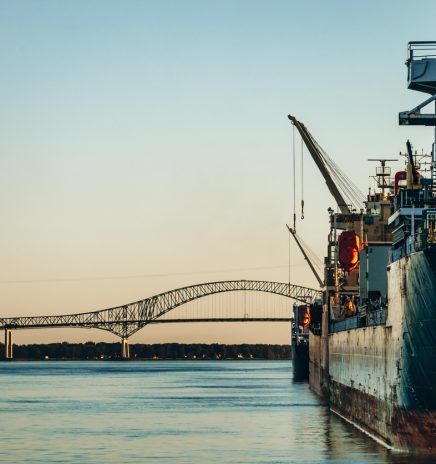
St. Lawrence Seaway Cargo Traffic Rises 3.5% Through September
Cargo traffic on the St. Lawrence Seaway increased 3.5% year over year through September 2026, reaching 24.941 million metric tons, according to year-to-date figures from the St. Lawrence Seaway Management... Read More
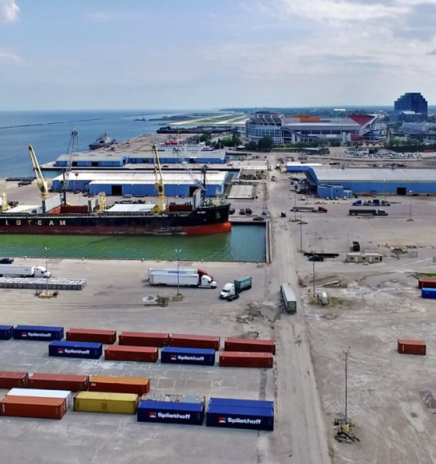
Port of Cleveland, Milo Harbour Move Cross-Lake Truck Ferry Project Forward
The Port of Cleveland and Milo Harbour Inc. signed a memorandum of understanding (MOU) in July to initiate a new cross-lake truck ferry service between northeast Ohio and southern Ontario. ... Read More