
A Need for Foreign-Trade Zones

What is an FTZ? Why Does It Matter?
Foreign-Trade Zones are federally authorized, specially secured areas considered outside U.S. Customs territory but under Customs supervision.
Essentially, an FTZ is a designated area within the United States (usually a production facility or warehouse) into which imported goods can be admitted without being subject to immediate customs duties (import taxes).
FTZs allow businesses to operate inside the United States while offsetting many savings they would have received by operating overseas and reducing variables in an extended supply chain and distribution channels. FTZs benefit the businesses they serve and the communities they’re located in by keeping and promoting American jobs, capital investment and infrastructure improvements in U.S. communities. Companies based in the United States can import items, reduce operational costs, create immediate bottom-line savings and improve import efficiencies.
Their purpose is simple yet powerful: to facilitate trade and enhance the global competitiveness of U.S.-based companies. Within an FTZ, goods can be stored, processed, inspected, destroyed, or combined with other products—all while enjoying significant financial and logistical advantages.
FTZ users benefit from:
- Duty exemption on re-exports and destroyed goods
- Duty deferral until goods enter U.S. Customs territory
- Duty reduction via inverted tariffs on finished products
- Merchandise processing fee (MPF) reduction through consolidated entries
- Streamlined logistics with direct delivery and simplified filings
- Quota avoidance for goods subject to import quotas
These benefits translate into real savings, faster turnaround and greater flexibility—especially for manufacturers, distributors and logistics providers navigating international markets.
Nationally, more than 550,000 Americans are directly employed in FTZ environments, and, according to the 85th FTZ Board Annual Report filed with Congress, they import almost $949 billion in merchandise.
Indiana’s FTZ Advantage
Indiana is one of only five states with statewide coverage under the Alternative Site Framework (ASF), and it leads the pack in size and scope. The ASF program allows companies anywhere in the state to activate FTZ space quickly. This flexibility is a game-changer for businesses seeking just-in-time manufacturing, e-commerce fulfillment, or global distribution.
Ports of Indiana is actively working with other FTZ grantees across the state to streamline the process and coordinate a more efficient way of marketing the program to the business community. The goal is clear. We want to make Indiana a leader in FTZ business and global trade.
A New Era of Containerized Trade
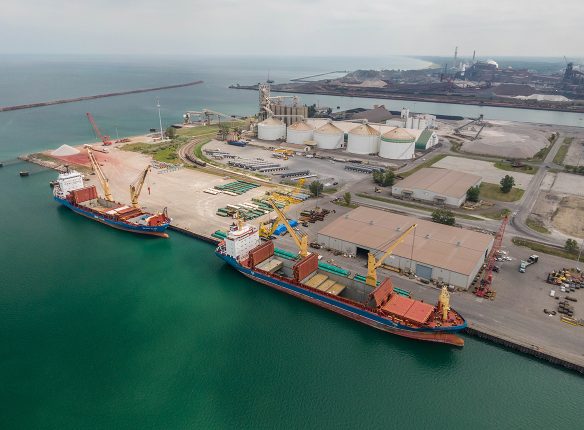
The 600-acre Burns Harbor port, strategically located on Lake Michigan, is a leader in foreign trade and is poised to become a cornerstone of the Midwest’s container supply chain. Ports of Indiana is developing an ocean container terminal, leveraging its direct access to global markets via ocean vessels transiting the Great Lakes and its proximity to the Midwest’s largest container market in the Chicago region.
Ports of Indiana has signed agreements with multiple international ports that are focused on developing new container trade lines with the U.S. Midwest and is working with numerous logistics partners to launch the new service. The port will offer specialized cargo services, onsite Customs inspections and access to FTZ and bonded warehouses to allow for duty deferral and streamlined cargo handling.
Why Containers Will Change the Game
Unlike congested coastal ports, Burns Harbor offers:
- Greater speed: Avoid congestion delays and inland supply chain bottlenecks.
- Direct ocean service: Fewer handoffs and predictable delivery schedules
- White glove service: Personalized support from an agile port
- Strategic location: Bypass Chicago traffic while connecting to key markets.
These advantages make Burns Harbor an ideal gateway for companies seeking efficient, cost-effective containerized trade, which offers many synergies with Indiana’s FTZ program.
Looking Ahead
For 2026, three key strategic priorities for Ports of Indiana include:
- Expanding FTZ access statewide through education and outreach
- Developing container facilities and partnerships at Burns Harbor
- Positioning Indiana as a leader in multimodal logistics and global trade
With strong leadership and a clear roadmap, Ports of Indiana is building more than infrastructure. We’re building opportunity.
Feature photo: Ports of Indiana-Burns Harbor
A Need for Foreign-Trade Zones
As global supply chains grow more complex and competitive, Ports of Indiana is stepping forward with a bold vision: to make Indiana the premier destination for Foreign-Trade Zone (FTZ) access... Read More
From History Keepers to Industry Builders at the National Museum of the Great Lakes
At the National Museum of the Great Lakes, our mission is to preserve, share and celebrate the past, present and future of the Great Lakes story. That story is vast,... Read More