


Algoma Steel to Lay Off 1,000 Workers, Close Blast Furnace
Algoma Steel, which is based in Sault Ste. Marie, Ontario, produces hot and cold rolled steel sheet and plate products and employs about 2,700 people. The layoffs will take effect on March 23, 2026. In a statement, Michael Garcia, CEO of Algoma Steel, referred to the negative impact the U.S. tariffs have had on free and fair trade. “For Algoma Steel, that foundation was shattered six months ago with the unprecedented 50% tariff imposed by the United States—effectively closing off a market that has been essential to our viability for generations and rendering traditional blast-furnace steelmaking no longer viable.”
Following the layoff announcement, Canada’s Industry Minister Mélanie Joly said that roughly half of the workers expected to be laid off will be eligible for rehire. Joly said the Canadian government will help fund Algoma’s plan to open a new plate mill and a new structural beams production plant for construction and infrastructure projects. These projects could result in the rehiring of 500 laid-off workers.
The mill received $500 million in government loans to protect it from the U.S. tariffs in September. In July, Algoma announced it had achieved its first steel production at its new state-of-the-art EAF project. The first arc and steel production has the potential to reduce carbon emissions by up to 70%.
The closing of the blast furnace and coke making operations are expected to impact fleets that ship iron ore to the mill since there will not be a need for lake freighters to deliver raw materials to Algoma.
Feature image: Algoma Steel EAF project

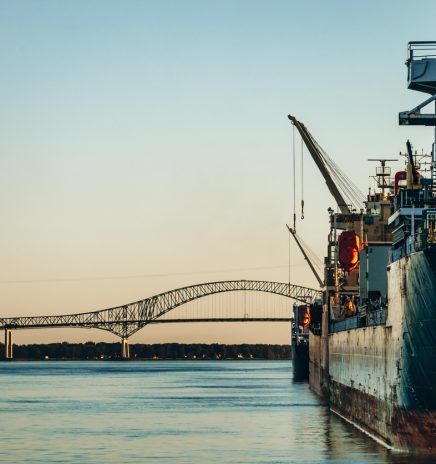
St. Lawrence Seaway Cargo Traffic Rises 3.5% Through September
Cargo traffic on the St. Lawrence Seaway increased 3.5% year over year through September 2026, reaching 24.941 million metric tons, according to year-to-date figures from the St. Lawrence Seaway Management... Read More
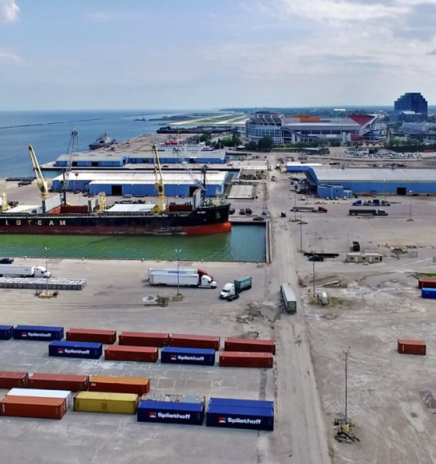
Port of Cleveland, Milo Harbour Move Cross-Lake Truck Ferry Project Forward
The Port of Cleveland and Milo Harbour Inc. signed a memorandum of understanding (MOU) in July to initiate a new cross-lake truck ferry service between northeast Ohio and southern Ontario. ... Read More