
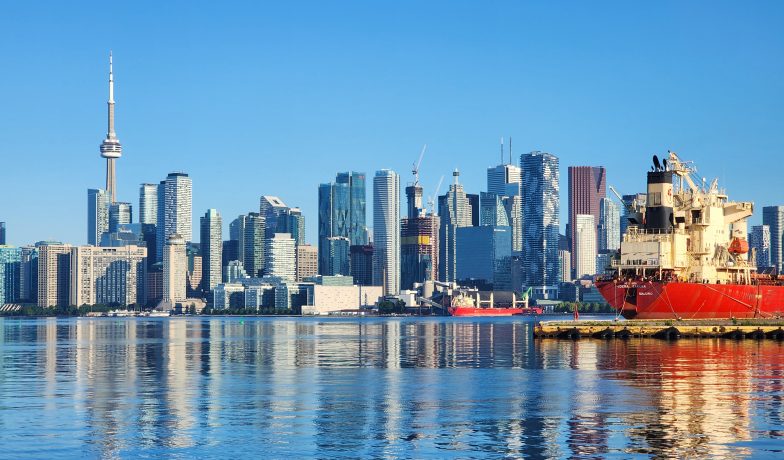

Canadian Great Lakes Ports Focus on Infrastructure Investments and Trade Strategies
These initiatives differ significantly in purpose. The Port of Toronto emphasizes urban infrastructure renewal and mixed-use waterfront transformation. The Port of Hamilton focuses on industrial capacity expansion and export growth, while the Port of Thunder Bay reflects trade-corridor modernization and northern economic development priorities.
Port of Toronto
A central investment underway is the rehabilitation of the historic Ship Channel Lift Bridge, jointly undertaken by the port authority and the city. Initiated in 2022 and expected to continue through the mid-2020s, the project modernizes mechanical and electrical systems and restores roadway approaches to maintain safe cargo flows into downtown Toronto.
This bridge is critical because bulk imports such as cement, salt and aggregates must move efficiently from ships to urban construction sites. Maintaining marine logistics capacity also helps reduce truck traffic and emissions in the metropolitan region.
Similarly, rehabilitation of the Cross Harbour Tunnel, which is coordinated between the port authority and the municipality, strengthens essential underground infrastructure connecting island water-treatment facilities to the mainland. Work is scheduled in phased winter closures between 2025 and 2027.
These initiatives illustrate how Toronto’s port investments are often integrated with broader urban infrastructure renewal, rather than focusing solely on cargo-handling expansion.
A much larger planning initiative affecting port lands is the long-term Port Lands redevelopment program, a tri-government effort reshaping former industrial areas into mixed-use neighborhoods while retaining employment and port-related functions.
This redevelopment includes flood-protection works, river naturalization, new transportation infrastructure and the creation of new developable land, such as the new island precinct. The strategy reflects Toronto’s shift toward balancing logistics activity, environmental resilience, real estate development and tourism and cruise operations rather than simply expanding traditional bulk-cargo capacity.
While Toronto has limited space for large new terminals, port tenants continue to invest in handling equipment, warehousing and supply chain integration to support the steady flow of bulk commodities serving construction and food sectors. The port handled approximately 2.1 million metric tons of cargo in 2025, demonstrating continuing demand for marine imports into the urban economy.
Port of Hamilton
The Pier 10 Export Expansion Project represents one of the most important ongoing capital initiatives at the Port of Hamilton. Supported by funding from Transport Canada’s National Trade Corridors Fund, the project includes these elements:
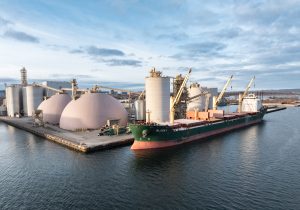
- rebuilding aging dock walls
- dredging to accommodate Seaway-size vessels
- reorganizing industrial land uses to create an agri-food logistics cluster
This will come in the form of a total investment estimated at approximately $16 million.
This reflects a broader federal strategy to enhance marine-rail-truck intermodal efficiency and facilitate export flows from Ontario’s agricultural sector.
The Hamilton–Oshawa Port Authority (HOPA) is also investing in a regional Great Lakes port network strategy, expanding partnerships and infrastructure connections with other ports (including Sault Ste. Marie). This initiative aims to strengthen export market access and diversify cargo types such as construction materials and agri-food commodities.
Such initiatives illustrate how Hamilton’s development agenda is less about urban redevelopment and more about industrial cluster formation and trade competitiveness.
Hamilton’s port lands host numerous steel, logistics and construction-materials firms that invest continuously in storage facilities, processing plants, and terminal operations. Although individual projects vary in scale, the cumulative effect is to reinforce Hamilton’s role as Ontario’s primary heavy-industrial Great Lakes port.
Port of Thunder Bay
At the Port of Thunder Bay, the dominant initiatives are federal investments aimed at improving Canada’s export logistics system. Through the National Trade Corridors Fund, the federal government has committed approximately $6.7 million for upgrades at Keefer Terminal.
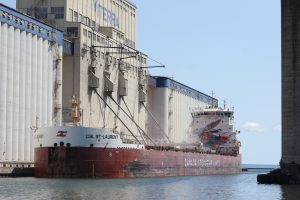
These investments include:
- redevelopment of the rail marshalling yard with heavier track and switches
- wharf upgrades and expansion of cargo laydown areas
- improved rail-crossing infrastructure and electrical servicing
Together, these projects are designed to increase cargo-handling capacity and attract new commodity flows, such as wind-energy components and fertilizers.
Thunder Bay’s investments also support broader federal and provincial goals to stimulate Northern Ontario industry, improve export routes for Prairie grain and mining outputs and enhance supply-chain resilience amid climate-related disruptions.
Unlike Toronto’s urban-integration agenda or Hamilton’s industrial clustering, Thunder Bay’s development reflects its strategic role as a transshipment gateway between western resource regions and global markets via the St. Lawrence Seaway.
Different Strategies
Federal funding plays a particularly important role in enhancing export capacity at Hamilton and Thunder Bay and maintaining critical infrastructure at Toronto. Meanwhile, municipal planning is most influential in Toronto, where land-use change pressures shape port investments.
Private firms are especially important in Hamilton, where terminal tenants and industrial producers drive capacity growth. In Thunder Bay, private investment tends to follow federal infrastructure upgrades, while in Toronto private logistics investment is constrained by land availability and urban priorities.
In Conclusion
Taken together, current and planned initiatives at Ontario’s major Great Lakes ports demonstrate a multi-layered investment landscape shaped by geography, industrial structure and public policy priorities.
Toronto’s port investments reflect the challenges of maintaining logistics functionality within a rapidly redeveloping global city. Hamilton’s initiatives highlight the continuing relevance of marine-based heavy industry and agri-food exports. Thunder Bay’s projects underscore the strategic importance of resilient inland gateways linking Canada’s resource regions to global markets.
In the coming decade, the effectiveness of these investments will depend on four elements:
- climate adaptation measures
- digitalization of logistics systems
- evolving trade patterns
- integration with rail and road infrastructure
There’s little doubt that Great Lakes ports will remain central nodes in Canada’s national trade-corridor strategy. The question is how much government will bring to the table, and how much private capital will lead the way or fill in gaps.
Last year, Transport Canada’s “Ports Modernization Review” set out some ambitious goals. The review is “examining ways to make Canada’s major ports among the most efficient and cleanest in the world by updating the governance structures that promote investment in Canadian ports.”
The review focused on governance and financial flexibility of port authorities; stronger federal oversight and accountability; and better responsiveness to users and communities. The review explicitly targets making ports “more efficient and clean” and better integrated into supply chains.
Ports are now seen by the central government not as standalone assets, but as nodes in national trade corridors. In light of the current geopolitical challenges, Canada’s goal is to reduce dependence on the United States and expand access to Indo-Pacific markets, as well as Europe and emerging economies. This reflects a strategic shift, wherein ports become geopolitical infrastructure.
Ultimately, Canada’s strategy is a corridor-based, investment-driven, green and sovereignty-focused modernization of the port system.
Different Perspectives from Four Stakeholders
Mathieu St-Pierre, president and CEO of the The St. Lawrence Economic Development Council, called the Great Lakes-St. Lawrence Seaway corridor a strategic infrastructure for the Canadian economy. “It is not merely a series of ports, but an integrated system that supports the smooth flow of industrial, agricultural and energy goods to North American and international markets,” he said.

St-Pierre noted that, in the current context, as North American supply chains are being reshaped and the imperative for economic sovereignty grows, strengthening the strategic position of the St. Lawrence and the Great Lakes has become essential. “Investments in heavy infrastructure such as docks, terminals, rail intermodality and handling capacity remain essential to support the growth of bulk cargo, general cargo and strategic products such as critical minerals,” he said.
But the corridor’s future competitiveness will depend just as much on its ability to modernize its digital infrastructure. “I am focused on the real-time flow of information between ports, carriers, terminals and intermodal networks, which is becoming a key factor in ensuring smooth operations, predictability and performance,” St-Pierre said.
The real challenge, to St-Pierre, is to envision the region as a cohesive corridor capable of combining physical modernization, collaborative governance and digital connectivity. “It is this integrated approach that will enable the region to sustainably strengthen its position in major North American trade flows,” he said.
Jim Athanasiou, president/CEO of the St. Lawrence Seaway Management Corporation (SLSMC), believes that the Seaway is a connected system at its core. “Ports, vessels and infrastructure all work together to move goods between inland North America and global markets. When you invest in port infrastructure, you’re strengthening the performance and reliability of that entire system,” he said.

Athanasiou’s view is that Canada’s Great Lakes ports are essential to regional economies and trade. “The level of investment we’re seeing across both Canada and the United States reflects how important this corridor has become,” he said.
As populations continue to grow and become more concentrated along the Great Lakes-St. Lawrence Seaway, there is a clear opportunity to make better use of marine transportation, as is done in other parts of the world. It is cost-effective, environmentally responsible and can play a greater role in reducing pressure on other modes, including congestion on roads. Well-positioned, modern ports are a big part of that.
Within that context, Athanasiou argues that the Seaway also has a distinct role in development along the corridor. “The St. Lawrence Seaway Management Corporation manages many of the waterside lands and works closely with landowners and partners to advance marine-enabling projects,” he said. “This helps ensure development supports long-term industrial activity and strong supply chain connections. Continued success will depend on strong collaboration across ports, governments and industry and on maintaining a clear, system-wide focus as these investments move forward.”
Ian Hamilton, president and CEO of HOPA Ports, believes investing in port infrastructure is imperative for Canada’s maritime industry. “At the Port of Hamilton, investments like P10 Export Expansion project are about more than infrastructure: they’re about national resilience,” he said. “In partnership with port tenants Parrish & Heimbecker, whose investment helped drive this expansion, we are strengthening multimodal connections across marine, rail and transport. Together, these investments enable Canada to move goods more efficiently and competitively, positioning the country to be its own best customer by ensuring seamless supply chains for Canadian producers and global markets.”

Hamilton also pointed to the strategy to build a port in Sault Ste. Marie, Ontario. “Our strategy is focused on building a more connected Great Lakes port network. Through targeted investments and emerging partnerships, including discussions with the city of Sault Ste. Marie, we are working to expand capacity, continue to diversify cargo and explore new trade opportunities,” he said. “This approach represents an important step toward strengthening Canada’s industrial backbone: an increasingly integrated port system that can drive growth, support key sectors such as agri-food, minerals and mining and construction materials and enhance Canada’s long-term trade competitiveness.”
Mark Rathbone, who serves as a real assets partner and global infrastructure investor network leader at PwC Canada, said that trade accounts for approximately two-thirds of Canada’s Gross Domestic Product (GDP), yet remains disproportionately reliant on the United States as its primary trading partner. “This structural dependence underscores the urgent need to diversify Canada’s economy, reduce exposure to single-market risk and build greater resilience and competitiveness to support long-term growth,” he said. “Strengthening trade corridors that connect Canada’s hinterland to the Pacific and Atlantic coastlines and leveraging emerging routes such as the Northern Passage will be fundamental to deepening trade connectivity with Asia, Europe and other global markets.”

The Great Lakes and associated port infrastructure are critical to this, as they:
- Support manufacturing, steel, energy, construction and agribusiness trade both nationally and internationally
- Move bulk cargo at significantly lower cost and emissions than road or rail
- Complement rail and highway corridors rather than replacing them
The Building Canada Act aims to facilitate the fast tracking of nation-building projects that are critical for growth. The National Trade Diversification Fund, alongside other initiatives like the Indigenous Advisory Council, Indigenous Loan Guarantee Program or Canada Infrastructure Banks’ increased funding envelope are all focused on growing Canada’s economy in the right way and improving Canada’s competitiveness globally while ensuring the economy remains resilient in times of uncertainty. Canada’s Great Lake trade corridors and ports act as key industrial enablers, integrating supply chains across Canada, with trade flows being deeply tied to capital investment cycles in steel, energy transition and construction.
Therefore, the case for investing capital in Great Lakes ports like Thunder Bay, Hamilton or Toronto remains strong. In addition to expanding capacity, these investments must make ports more resilient, more efficient and more adaptable to ensure Canada’s competitiveness.
Projects that reduce bottlenecks through better rail interfaces, yard layouts and berth productivity tend to deliver compounding benefits. Incorporating new technologies can also improve efficiency in operations, energy usage, maintenance spend and manpower needs. At the Port of Thunder Bay, funding for two projects through the National Trade Corridors Fund has been directed to rail marshalling yard redevelopment and Ports Keefer Terminal wharf/laydown and electrical upgrades. As Canada’s most inland port, this intermodal facility is essential for importing breakbulk, project cargo and bulk to the Prairies and northern Ontario.
Trade diversification enablement in an uncertain environment is also critical. Investments that broaden what can move through a port help Canada manage demand shocks and shifting trade lanes.
At the Port of Hamilton, with its new inland rail terminal for containers being ready for business, active efforts to strengthen container and intermodal capability, including expanded container transfer facilities and customs-service enablement discussions, are exactly the kind of “system” change that can unlock private investment and new exporter options. The new inland rail terminal allows importers to send containers by rail directly to Hamilton from ocean ports, with customs clearance handled near the final destination, reducing trade bottlenecks at ocean ports and increasing Hamilton’s ability to export internationally.
Environmental, Social and Governance (ESG) expectations for port investors remain important in attracting investment and traffic. ESG-aligned transport infrastructure is emerging as a defensive, long-duration asset class for institutional investors. Decarbonization and resilience are no longer optional. They are core investment screens. Ports face heightened ESG scrutiny due to climate exposure and community proximity. Social license and workforce strategy materially affect bankability, while governance and disclosure quality increasingly determine financing terms.
Rising sea levels, storm surge, flooding and heat stress pose material risks to asset value and continuity of trade. Major financial institutions highlight resilience investments as essential to long-term port viability, while modern supply chains depend fundamentally on consistent port operations. The Port of Toronto‘s Port Lands Flood Protection Project and its focus on sustainable energy use are great examples of port investment aimed at climate resilience, emissions and social considerations.
The 17 Canada Port Authorities, created under the Canada Marine Act, operate independently from the government. They are federally incorporated, autonomous, not-for-profit, non-share corporations that operate at arm’s length from the federal government.
The government now recognizes that strategic investments are needed, including at Canada Port Authorities, to achieve the much-desired shift away from the United States and towards trade diversification. This builds on Transport Canada’s long history of investing in trade-enabling port infrastructure projects over the past few decades, to enhance the efficiency of Canada’s ports and ensure supply chain fluidity. Since the launch of the program in July 2017, the government of Canada has drawn upon the National Trade Corridors Fund (NTCF) to support infrastructure projects across Canada that reduce bottlenecks and build more efficient and fluid trade corridors to global markets. This program has provided funding to several organizations, including the Hamilton-Oshawa Port Authority and The St. Lawrence Seaway Management Corporation. For information on these projects and the related funding, please refer to Transport Canada’s website.
On March 3, Steven MacKinnon, Minister of Transport and Leader of the Government in the House of Commons, announced the launch of calls for proposals for the $5 billion Trade Diversification Corridors Fund. Through this fund, Transport Canada is advancing a national, strategic approach to infrastructure investment that prioritizes projects improving the efficiency, reliability and resilience of Canada’s trade corridors, including ports. These investments are intended to reduce congestion and bottlenecks, enhance system performance and build the corridors needed for future trade and community needs.

Port of Cleveland, Milo Harbour Move Cross-Lake Truck Ferry Project Forward
The Port of Cleveland and Milo Harbour Inc. signed a memorandum of understanding (MOU) in July to initiate a new cross-lake truck ferry service between northeast Ohio and southern Ontario. ... Read More

Building Partnerships Between Great Lakes Ports and Shipyards
The American Great Lakes Ports Association (AGLPA) and Great Lakes Alliance of Shipyards have signed a memorandum of understanding establishing a formal partnership between the region’s port and shipyard communities. ... Read More