


Ice Conditions Renew Calls for Additional U.S. Icebreaker on Great Lakes
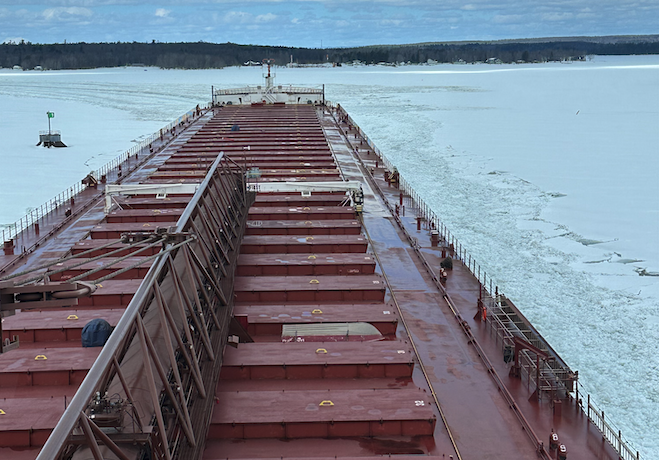
The St. Marys River and Whitefish Bay form the only shipping route between Lake Superior and the lower Great Lakes, carrying key raw materials such as iron ore used by steel mills. Ice conditions exceeding 2 feet in some areas, with up to 3 feet of snow cover, have delayed multiple U.S.-flagged vessels attempting to move through the system.
Some shipping companies reported delays of more than 24 hours as vessels waited for icebreaking assistance.
The U.S. Coast Guard cutter Mackinaw, the only heavy icebreaker assigned to the Great Lakes, was unable to reach Whitefish Bay because of an engineering casualty, according to the Lake Carriers’ Association (LCA). Without the vessel operating in the area, several U.S.-flagged ships remained stuck in ice in the lower St. Marys River and Whitefish Bay.
A Canadian Coast Guard icebreaker was briefly deployed to assist but later left the area to escort Canadian vessels bound for Thunder Bay, Ontario, the association said. This prevented vessels from moving downbound from Duluth, Minnesota, and cargo shipments destined for steel mills on the lower lakes.
Jim Weakley, president of the LCA, said the disruption illustrates the limited icebreaking resources available on the Great Lakes. “The Lake Carriers’ Association has pleaded with Congress to get another heavy U.S. Coast Guard icebreaker on the Great Lakes, but unfortunately funds have been slow to come,” Weakley said.
The opening of the St. Lawrence Seaway and the Welland Canal earlier in the season increased demand for icebreaking services across the system, according to the association. Weakley also said reliance on Canadian icebreaking assistance can create uncertainty when vessels serving Canadian ports require support.
While ice conditions on the southern Great Lakes are largely clear, heavier ice in northern waters continues to affect vessel traffic, particularly near Lake Superior. Industry representatives said delays in the early part of the shipping season can ripple through supply chains because the Great Lakes fleet moves raw materials such as iron ore, limestone and coal used in U.S. manufacturing.
The LCA has argued that additional U.S. icebreaking capacity is needed to maintain reliable navigation during severe winter and early spring conditions.

Ice Conditions Renew Calls for Additional U.S. Icebreaker on Great Lakes
Commercial shipping on the Great Lakes has slowed sharply just a few days into the 2026 navigation season, as ice conditions in the St. Marys River and Whitefish Bay halted vessel traffic and renewed... Read More
Seaway System Closes for 2025 Navigation Season
The Great Lakes-St. Lawrence Seaway System officially closed for the 2025 navigation season on January 12. The system was supposed to close on January 5, but ice buildup created shipping... Read More