
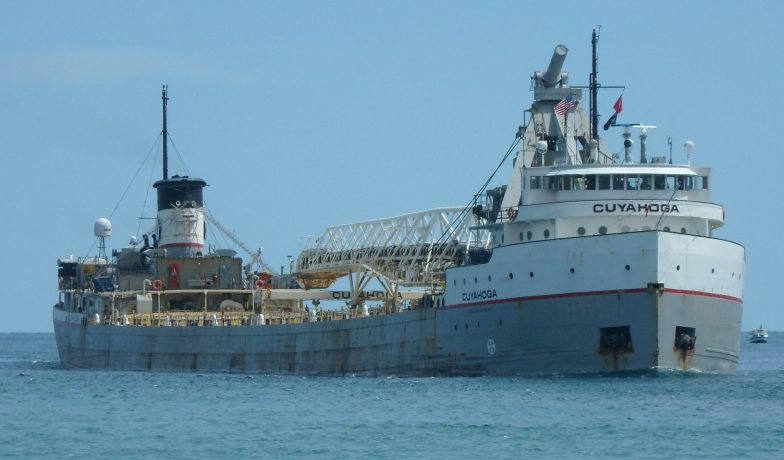

M/V Cuyahoga to be Dismantled after Being Damage in 2024 Fire
The 82-year-old vessel was built by the American Shipbuilding Company of Lorain, Ohio, and launched in 1943 as the Mesabi. The ship was one of 16 Maritime Class bulk carriers built for the United States Maritime Commission to transport iron ore to Great Lakes steel mills during WWII. On completion, the vessel was immediately traded to the Great Lakes Steamship Company and renamed J. Burton Ayers.
The 620-foot, L6 Maritime-class was the first bulker design on the Great Lakes with a cruiser stern. She was later acquired by Lower Lakes Towing Ltd. of Port Dover, Ontario, where she was renamed Cuyahoga under Canadian registry.
In 2023, the Cuyahoga was damaged in an engine room fire. It was repaired and returned to service later that year. In March 2024, while in winter layup in Ashtabula, Ohio, a fire broke out in the conveyor belt system, causing extensive damage. Following an inspection, the ship was deemed unsuitable for repair. The Cuyahoga was the oldest Canadian-flagged laker in service at the time she was decommissioned. The ship will be dismantled for her steel at Port Colborne’s Marine Recycling Corporation.

Building Partnerships Between Great Lakes Ports and Shipyards
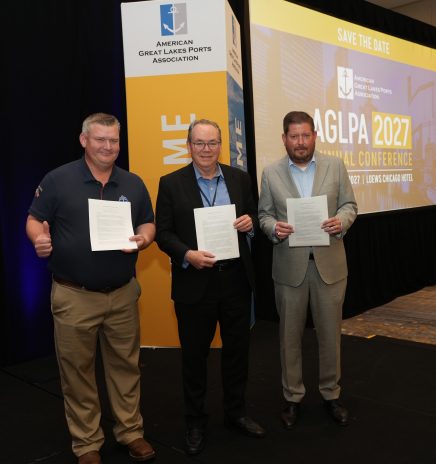
The American Great Lakes Ports Association (AGLPA) and Great Lakes Alliance of Shipyards have signed a memorandum of understanding establishing a formal partnership between the region’s port and shipyard communities. ... Read More

Fraser Industries, HD Hyundai Outline Plan to Modernize U.S. Shipyard Operations
Fraser Industries LLC has signed a memorandum of understanding (MOU) with HD Korea Shipbuilding & Offshore Engineering (HD KSOE) to collaborate on modernizing U.S. shipyards, with Fraser Shipyards in Superior, Wisconsin, expected... Read More