
Seaway Opening Ceremony
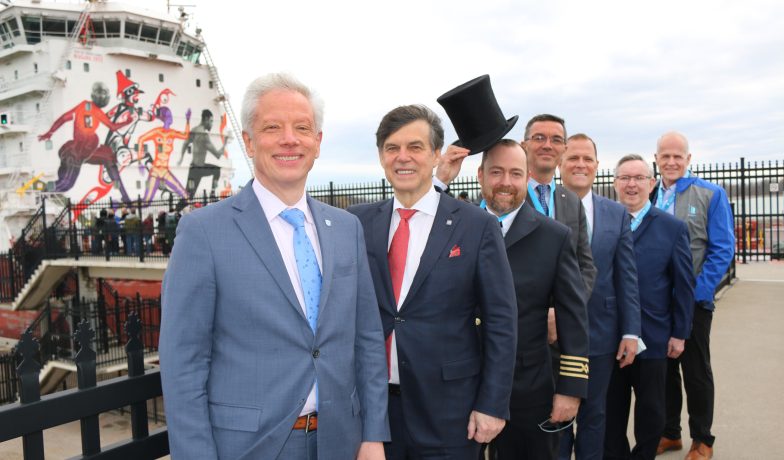
The ship was painted with a mural depicting four stylized runners, celebrating the upcoming Canada Summer Games. The mural was unveiled as part of the ceremony in St. Catherines, Ontario.
The ceremony was the first in-person ceremony held in two years.
“It was a pretty exciting time,” Bowles said.
Each year the ceremony alternates between St. Catherines and the St. Lambert Lock in Montreal.
The St. Catherines events always include a traditional top-hat ceremony as beaver pelts, which were made into top hats, were some of the first items traded along the waterways that eventually became the seaway. The captain of the first vessel to traverse the Welland Canal gets to wear and doff a ceremonial top hat kept in a museum the rest of the year.
Canadian Transport Minister Omar Alghabra (who attended virtually), Middlebrook, and Bowles welcomed the transit of the first commercial vessel of the season.
“The seaway system, and the people operating it, have kept goods moving efficiently and reliably to and from America’s heartland when we needed them most,” U.S. Transportation Secretary Pete Buttigieg said in a statement prepared for the ceremony. “We’re proud to open this year’s navigation season for the seaway system, and, with our Canadian partners, support this critical part of our economy and supply chain.”
More than 237,000 jobs and $35 billion in economic activity in the United States and Canada are annually supported by movement of various cargoes on the seaway system. More than 35 million metric tons of cargo move along it each year, the U.S. Department of Transportation said in a news release.
A ship transiting the seaway system’s 15 locks from Montreal to Lake Erie crosses the international border 27 times, and the U.S. Department of Transportation and Transport Canada work closely together to ensure that journeys are as safe and seamless as possible.

Port of Cleveland, Milo Harbour Move Cross-Lake Truck Ferry Project Forward
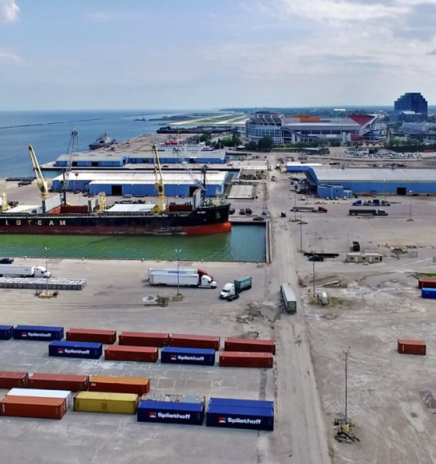
The Port of Cleveland and Milo Harbour Inc. signed a memorandum of understanding (MOU) in July to initiate a new cross-lake truck ferry service between northeast Ohio and southern Ontario. ... Read More
Building Partnerships Between Great Lakes Ports and Shipyards
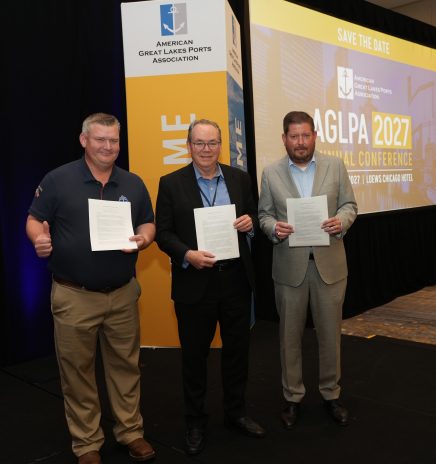
The American Great Lakes Ports Association (AGLPA) and Great Lakes Alliance of Shipyards have signed a memorandum of understanding establishing a formal partnership between the region’s port and shipyard communities. ... Read More