
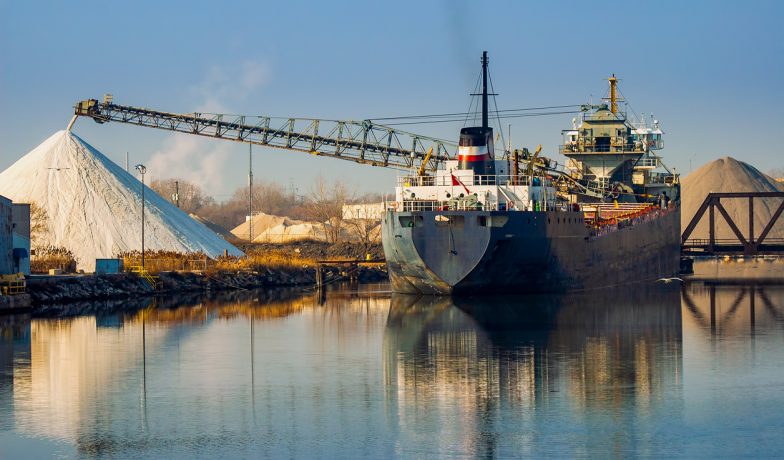

The Enduring Value of the Great Lakes-St. Lawrence Seaway
In an era defined by supply chain disruption and renewed attention to domestic manufacturing, the Seaway stands out as a resilient, efficient and underutilized asset that provides critical redundancy to our freight transportation network. It is not merely a relic of 20th century infrastructure ambition; it is a 21st century solution for moving goods sustainably, competitively and securely.
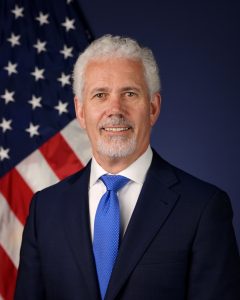
Serving as administrator since June of last year on behalf of the Trump-Vance administration has been a distinct honor. For me, this isn’t just a new role; it’s the continuation of a lifelong journey. I got my start in the maritime industry nearly 50 years ago, operating heavy equipment and loading ships in Superior, Wisconsin. That hands-on experience gave me a lasting respect for the skill, grit and teamwork it takes to keep cargo moving. Since then, I’ve had the privilege of managing waterfront terminals, advising on logistics strategies and learning from experienced crews, engineers and industry professionals who know the Great Lakes-St. Lawrence Seaway system inside and out. I’ve spent my career moving cargo through this system—more than 200 million tons of it—and I know just how vital this corridor is to our economy, our communities and our nation’s future.
A System Built for Scale and Still Delivering
Since its opening in 1959, the Seaway has facilitated the movement of more than 3 billion metric tons of cargo. Today, it supports more than 240,000 jobs and generates tens of billions of dollars in economic activity annually across the United States and Canada. From iron ore feeding steel mills in Ohio and Indiana, to grain exports from Minnesota, Wisconsin and Ohio reaching markets in Europe and North Africa, the system plays a central role in sustaining industrial output and agricultural competitiveness.
Recent trade performance underscores this point. Despite global headwinds, the Seaway has maintained strong cargo volumes in key sectors, including dry bulk commodities and project cargo. In particular, U.S. grain shipments have remained robust, reflecting both strong harvests and the efficiency of Great Lakes ports as export gateways. Likewise, the movement of oversized and heavy-lift cargo, such as energy and industrial machinery, has highlighted the system’s unique capability to handle cargo that cannot easily move by rail or highway.
These accomplishments are not accidental. They are the result of coordinated investment, operational excellence and close collaboration with our Canadian partners at the St. Lawrence Seaway Management Corporation (SLSMC).
Modernization and Infrastructure Investment
Under President Donald Trump, the Seaway aims to remain competitive and continue to evolve. Over the past decade, GLS has made targeted investments to modernize lock infrastructure, improve asset reliability and enhance system resilience. Our Seaway Infrastructure Program (SIP) has focused on rehabilitating critical components of the U.S. locks in Massena, New York, ensuring that they can operate safely and efficiently for decades to come.
Equally important has been the adoption of advanced technologies. Hands-free mooring systems, real-time data platforms and enhanced traffic management tools have improved both safety and throughput. These innovations reduce transit times, minimize delays and provide shippers with greater predictability, which is an increasingly valuable commodity in today’s logistics environment.
We are also working to strengthen cyber resilience and integrate digital systems across the binational network. As maritime infrastructure becomes more connected, safeguarding operational integrity is essential.
A Sustainable Transportation Advantage
One of the Seaway’s most compelling attributes is its environmental performance. Maritime transportation on the Great Lakes is significantly more fuel-efficient than rail or trucking on a per-ton basis. A single Seaway-sized vessel can carry the equivalent of nearly 1,000 trucks, reducing congestion on highways and lowering greenhouse gas emissions.
The Seaway offers a practical pathway to reduce the carbon intensity of freight movement. We are actively supporting initiatives to advance cleaner vessel technologies, including alternative fuels and emissions-reduction strategies, while ensuring that environmental stewardship remains a core operational priority.
Strengthening U.S. Competitiveness
The Seaway’s value extends beyond transportation efficiency. It is a strategic asset for U.S. economic competitiveness. By providing direct access from the Great Lakes region to international markets, the system enables manufacturers and producers to diversify export routes and reduce reliance on long-distance transportation to congested coastal ports.
This is particularly important as we look to reinforce and optimize domestic supply chains and expand industrial capacity. The Great Lakes region remains a manufacturing powerhouse, and the Seaway is a critical enabler of that strength. Continued investment in port infrastructure, intermodal connections and dredging will be essential to unleashing additional capacity and attracting new cargo flows.
We are also engaging with stakeholders to promote greater awareness of the system’s capabilities. Too often, the Seaway is overlooked in national logistics planning. By highlighting success stories and demonstrating cost advantages, we can encourage more shippers to consider this trade corridor as part of their supply chain strategies.
A Binational Partnership with a Shared Future
The success of the Seaway is rooted in its binational governance. The United States and Canada share responsibility for its safe and seamless operation, and this partnership has proven both durable and effective. At a time when cross-border cooperation is more important than ever, the Seaway stands as a model of what can be achieved through collaboration.
Looking ahead, our focus is clear: maintain reliability, enhance efficiency and position the system for future growth. This includes exploring opportunities to accommodate new types of cargo, leveraging emerging technologies and ensuring that our workforce is equipped with the skills needed to operate increasingly sophisticated infrastructure.
In Conclusion
The Great Lakes–St. Lawrence Seaway is not just a waterway, it is a strategic economic engine, a sustainable transportation solution and a cornerstone of North American trade. Its continued success will depend on our ability to invest wisely, innovate responsibly and communicate its value effectively.
As administrator, I am committed to advancing these priorities and ensuring that the Seaway remains a vital link in the global supply chain. The opportunity before us is not simply to preserve this system, but to fully realize its potential in a rapidly changing world.
Under U.S Transportation Secretary Sean P. Duffy, Great Lakes St. Lawrence Seaway Development Corporation (GLS) is responsible for the operation and maintenance of the U.S. portion of the St. Lawrence Seaway. GLS ensures the safe and efficient movement of cargo and is a driving force for economic growth in the U.S. Great Lakes region, supporting more than 147,000 U.S. jobs and generating $26 billion in annual U.S. economic activity. Visit seaway.dot.gov for more information.

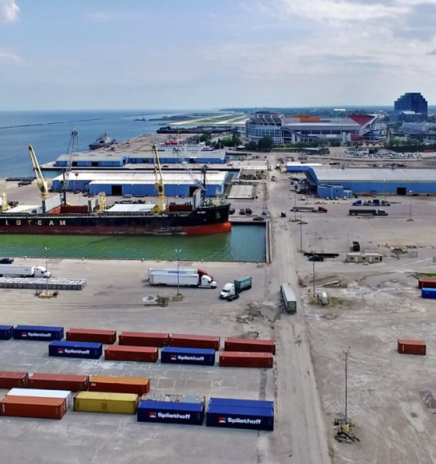
Port of Cleveland, Milo Harbour Move Cross-Lake Truck Ferry Project Forward
The Port of Cleveland and Milo Harbour Inc. signed a memorandum of understanding (MOU) in July to initiate a new cross-lake truck ferry service between northeast Ohio and southern Ontario. ... Read More

Canada’s Retaliatory Tariffs on U.S. Goods Take Effect
Canada’s retaliatory tariffs of 15% to 50% on $27.6 billion worth of U.S. goods went into effect on Sept. 8. These new tariffs follow the collapse of bilateral trade negotiations with... Read More