
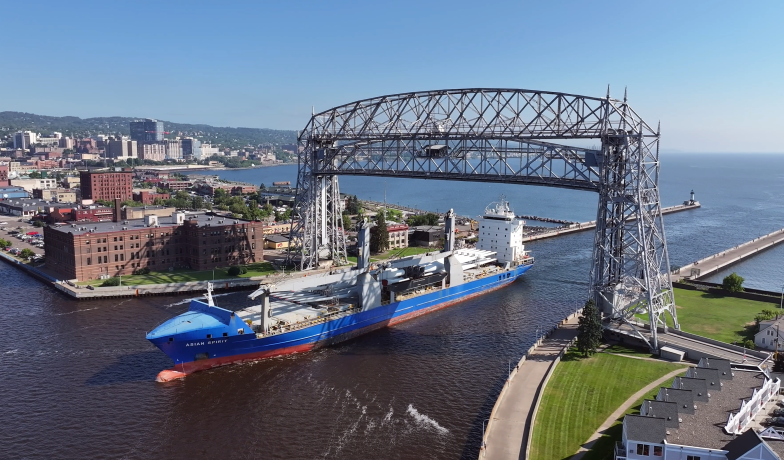

Two Decades of Wind Energy Cargo at Duluth’s Clure Terminal
A Legacy of Innovation
Since the first wind energy shipment in April 2005, Duluth Cargo Connect—a partnership between Lake Superior Warehousing and the Duluth Seaway Port Authority—has transformed the Clure Public Marine Terminal into a leading logistics hub for renewable energy components. Over two decades, the terminal has handled more than 2.6 million freight tons of wind energy cargo, solidifying its role as a pivotal center for clean energy logistics in the Midwest.
Record-Breaking Achievements
Duluth Cargo Connect has continually set industry milestones. By 2011, the terminal had cumulatively welcomed more than 1 million freight tons of wind energy cargo shipments. In 2020, it achieved a single-season record by handling 525,000 freight tons across 30 vessels from eight countries on four continents. In 2024, the terminal unloaded the longest wind turbine blades to date, measuring 260 feet. These milestones emphasize the terminal’s capacity to manage complex, large-scale shipments.
Award Winning Logistics
The port’s attention to road and rail clearances has garnered multiple accolades. The Railway Industrial Clearance Association recognized Duluth as a top North American port, while Heavy Life and Project Forwarding International awarded Duluth Cargo Connect as the Worldwide Port/ Terminal Operator of the Year in 2019. Collaborations with MnDOT, WisDOT, the city of Duluth, St. Louis County and state law enforcement agencies ensure the safe and efficient transportation of oversized cargoes.
Rooted in Energy Transport History
Duluth’s energy cargo legacy spans more than 150 years, beginning with coal shipments in the 1870s. Today, the port continues to serve as a link in the regional, national and global supply chain, accommodating both bulk and breakbulk cargoes, including conventional fuels and renewable energy components.
Continuing to Lead the Industry
The August 2025 delivery by Asian Spirit exemplifies Duluth Cargo Connect’s ongoing commitment to expanding clean energy infrastructure. With daily sailings of energy bulk and breakbulk cargoes, the port stands as the Great Lakes’ largest tonnage port, reinforcing its essential role in the evolving landscape of renewable energy logistics.
Image courtesy of Duluth Seaway Port Authority

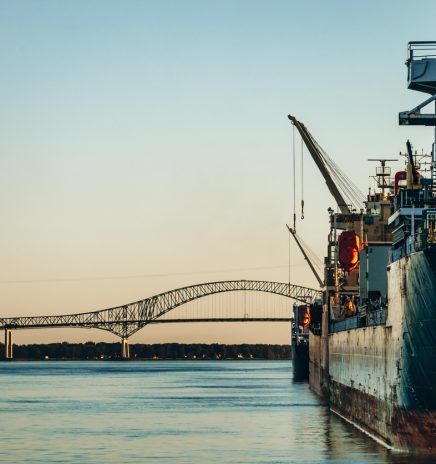
St. Lawrence Seaway Cargo Traffic Rises 3.5% Through September
Cargo traffic on the St. Lawrence Seaway increased 3.5% year over year through September 2026, reaching 24.941 million metric tons, according to year-to-date figures from the St. Lawrence Seaway Management... Read More
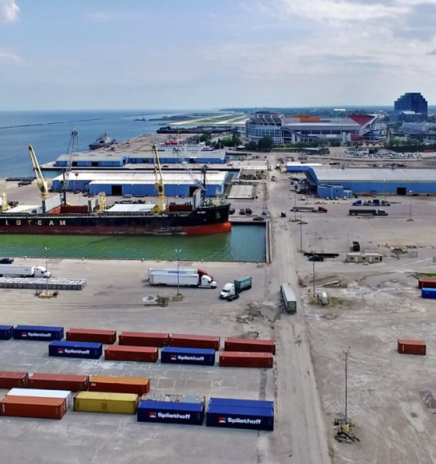
Port of Cleveland, Milo Harbour Move Cross-Lake Truck Ferry Project Forward
The Port of Cleveland and Milo Harbour Inc. signed a memorandum of understanding (MOU) in July to initiate a new cross-lake truck ferry service between northeast Ohio and southern Ontario. ... Read More