

Women in Logistics: Leading the Way
Delle Rose-Ash, who works as manager of market development at the Hamilton-Oshawa Port Authority (HOPA Ports), said she entered the industry after a friend shared a job posting that matched her skills and interests. She applied, got the job and quickly found herself drawn to an industry she described as challenging and rewarding.
Her involvement with The Marine Club and The Grunt Club began early in her career. She became more active with The Marine Club, eventually joining its board, where she has served for nearly a decade. She said the experience broadened her understanding of the Great Lakes maritime system and gave her additional experience in governance, finance and strategic decision-making.
Boehmer’s career began with what she called a “happy accident.” While attending university, she was offered a receptionist position at Canfornav Limited. She later moved into the company’s operations department, working as a disbursement clerk, handling laytime and disputes, and becoming a vessel operator. After about 10 years in those roles, she took over bunker purchases for the fleet. She now has 24 years of experience in Canfornav’s operations department.
Their careers now intersect at the top of two of Canada’s longstanding maritime organizations.

Maryse Pare, President, Fondation de l’Institut maritime du Québec; Dalia Dief, National Council Chair, Canadian Institute of Marine Engineering
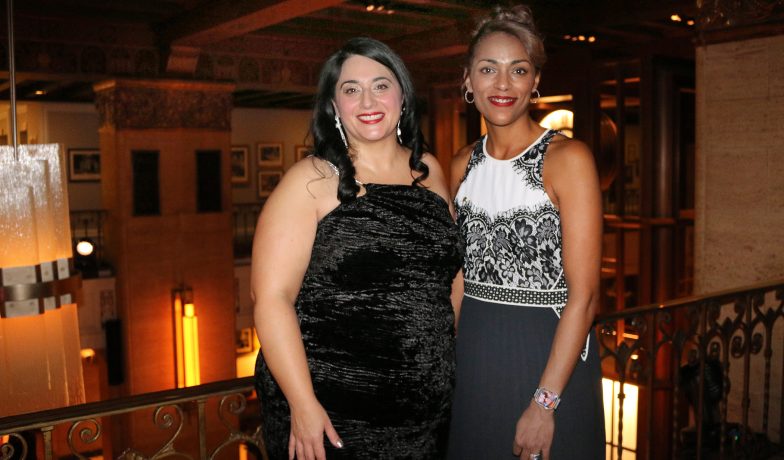
Boehmer is president of The Grunt Club, while Delle Rose-Ash is president of The Marine Club. Although both clubs have had women serve as president previously, this is the first time women have held the presidencies of the two organizations simultaneously. The clubs, which have nearly a century of history, are longstanding social and business organizations within the Great Lakes maritime community.
The milestone comes as the industry continues to address workforce shortages, an aging workforce, infrastructure needs, changing trade patterns and the need to attract more women to maritime careers.
Delle Rose-Ash and Boehmer spoke with Great Lakes/Seaway Review about their careers, their involvement with the clubs and the challenges facing the Great Lakes-St. Lawrence Seaway.
GL/SR What do these organizations mean to you, professionally and personally?
Delle Rose-Ash: To me, The Marine Club and The Grunt Club are truly the heart of the Great Lakes maritime community. They bring together tradition, history and professionalism with a genuine sense of camaraderie.
While our industry is defined by complex operations and serious responsibility, these organizations add warmth, energy and connection in a way that makes lasting relationships possible. They are spaces where business happens naturally, alongside laughter, shared experience and deep respect for the work we all do.
Boehmer: Shipping is very personal, in my experience. It kind of runs through your blood. As a family-oriented person, the club’s close community is very attractive to me. The club has positively influenced my career and personal relationships through their networking opportunities. These events encourage collaboration and offered valuable resources that span past my professional boundaries.
GL/SR How has your involvement with The Marine Club and The Grunt Club impacted your careers?
Boehmer: I’ve made some great connections within the industry. These connections have not only increased my knowledge of the marine industry but further created some long-time friendships. Professionally, I’ve been able to connect with experienced members, offering guidance and insight, and increasing my skills. I’ve been able to collaborate on projects outside of the club for the betterment of the Montreal shipping community.
Delle Rose-Ash: Participation in both organizations has always led to meaningful relationships. However, serving on The Marine Club Board for nearly a decade has had a particularly profound impact.
The Marine Club Board brings together approximately 20 professionals representing a broad cross-section of Great Lakes maritime organizations across Ontario. Through this network, I’ve gained a much deeper understanding of the system as a whole; not just the operations, but the people behind them.
As I’ve progressed into officer roles, I’ve also developed experience in governance, finance and strategic decision-making opportunities that complement my professional role and have strengthened my leadership skills.
GL/SR What impact do The Marine Club and The Grunt Club have on the Great Lakes maritime industry?
Delle Rose-Ash: The Marine Club’s mandate is to bring the industry together through camaraderie and business development. As a result of our activities, we can give back meaningfully to the industry each year.
Through our Good Works program, we distribute approximately $60,000 annually to organizations that support workforce development, education and seafarer well-being. These include the Canadian Marine Careers Foundation, the Navy League, The Brigs, Georgian College, The Mission to Seafarers, The Mariners’ House, Women in Logistics and others.
By investing in people, from young students to those currently serving, we help promote and sustain the Great Lakes shipping industry for the long term.
Boehmer: The Grunt Club provides networking opportunities through various events throughout the year. These opportunities foster connections between members, which have led to job opportunities, knowledge sharing and community development. The club further donates to charitable causes within the marine industry, our main beneficiaries being the Mariners’ House of Montreal, Institut Maritime du Quebec, and, most recently, we added Canadian Marine Careers Foundation to our list.
GL/SR Looking back on your careers, what changes have you seen in the opportunities and roles available to women in the maritime industry?
Boehmer: Women’s roles in the industry have evolved significantly over the years, personally in a positive way. Many organizations within the community, including The Grunt Club, have been actively promoting gender equality. New organizations have developed with the sole purpose of advocating and promoting women, such as Women in Logistics and WISTA.
Educational programs and training initiatives have been implemented in companies focused on career development, encouraging women within. These programs have opened many sectors of the industry to women that used to be dominated by men, such as pilots, captains and engineers.
Delle Rose-Ash: The change has been both visible and encouraging. More women are entering the industry and are increasingly present in operational, leadership and decision-making roles.
The Marine Club itself reflects this progress. While I am only the fifth woman to serve as president, I am the third in the past seven years. That momentum speaks volumes about the direction the industry is moving.
GL/SR What does it mean to you to see women take on more leadership roles in the industry?
Delle Rose-Ash: It means a great deal to me. I firmly believe that representation matters. When people see themselves reflected in leadership, it signals progress and possibility.
Beyond gender, diversity drives innovation and stronger outcomes. Inclusive organizations are better equipped to adapt, grow and succeed. I want to be part of advancing that progress, not just observing it.
Boehmer: I find it inspiring and encouraging. It signifies progress toward gender equality and reflects the changing dynamics of the industry in a positive way. Together we can make a difference that can better address challenges and capitalize on opportunities presented with our diverse perspectives.
GL/SR Looking toward the future, what else needs to be done to encourage women to consider a career in maritime?
Boehmer: Personally, I’d love to see more outreach programs in schools to help spark interest among young women. I would encourage more workshops and seminars led by successful female professionals advertised to the public to help attract more women to the industry.
Delle Rose-Ash: Awareness is key. Many people simply don’t know these careers exist. We also need to continue advocating for pay equity, mutual respect and recognition of expertise. It’s important to move beyond outdated assumptions and acknowledge the full range of skills and leadership women bring to the industry.
GL/SR What does it mean to you to be the first women to simultaneously serve as presidents of The Marine Club and The Grunt Club?
Boehmer: It’s an incredible feeling mixed with pride and a sense of responsibility. While we are not the first women presidents, it does set a historical moment for our clubs. It shows just how far the industry has come promoting and encouraging women, and how women have significantly been immersed within different sectors of the industry.
Delle Rose-Ash: I’m incredibly proud and especially proud to share this moment with Yolanda. She is intelligent, thoughtful and a strong leader.
To me, this represents meaningful progress. It’s not about breaking the glass ceiling all at once, but about widening the cracks so those who follow can move forward more easily.
GL/SR As the current presidents of The Grunt Club and The Marine Club, what do you see as the biggest challenges facing the maritime industry on the Great Lakes?
Delle Rose-Ash: Labor availability remains a significant concern, and geopolitics continue to influence trade patterns, decisions and investment.
As social and business-focused organizations, our role is to help strengthen connections, share information and create opportunities. With nearly a century of history, both clubs have weathered many challenges before. And consistently, the industry has moved forward through collaboration and resilience.
Boehmer: The aging workforce and infrastructure, including vessels, are a big challenge. Some ports require substantial investment to maintain or upgrade while others have already been actively upgrading and expanding their infrastructure, including the lock systems.
This has created some good competition and helped advance trade opportunities; however, it’s attached to a significant increase in operating costs and delays. The challenge of finding skilled workers has limited potential growth and caused operational delays. Environmental concerns have further increased costs to comply with updated regulations. These hurdles have made it more challenging to be competitive with the global market.
GL/SR As you mentioned, the lack of skilled workers is a big concern for stakeholders on the Great Lakes-St. Lawrence Seaway. What initiatives do you think need to take place to address the issue?
Boehmer: This has been a hot topic for a long time. When I joined the industry over 20 years ago, I was amongst the youngest in operations. It was crucial to find avenues and educational resources to help my career. In Montreal, there were not many local options.
I would recommend enhancing educational partnerships with local high schools, colleges and technical schools with tailored programs that directly meet industry needs. Perhaps encouraging local shipping companies to provide internships or apprenticeships can help attract potential hires and assist with hands-on training. Hosting or joining local job fairs may broaden awareness amongst the youth.
Delle Rose-Ash: This is one of the most pressing challenges facing our sector. Through The Marine Club’s Good Works program, we actively support organizations that are addressing workforce development, including the Canadian Marine Careers Foundation and Georgian College.
Continued collaboration between industry, education and community organizations will be critical to ensuring the next generation is informed, trained and inspired to enter maritime careers.
Feature photo: Gina Delle Rose-Ash, President, The Marine Club, Yolanda Boehmer, President, The Grunt Club

Women in Logistics: Leading the Way
Gina Delle Rose-Ash and Yolanda Boehmer took different paths into the maritime industry, but both built careers through hands-on experience, professional relationships and increasing leadership responsibilities. Delle Rose-Ash, who works... Read More

IMPACT! 2027 Award
Help us recognize our industry’s influential women! INSPIRED BY THE WOMEN AROUND US, The Great Lakes/Seaway Review is now accepting nominations for the IMPACT! 2027 Award, an annual award to... Read More