
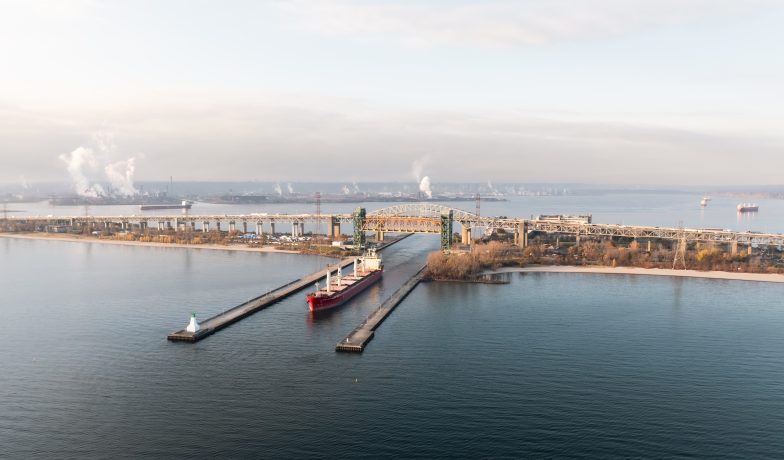

68th Navigation Season Underway Amid Economic Challenges and Uncertainty
Geopolitical tension, economic uncertainty and ice buildup on the upper Great Lakes and St. Lawrence River slowed commercial marine traffic within days after the start of the 68th navigation season.
The 2026 season kicked off when the M/V Blacky, operated by Canfornav, transited the St. Lambert Lock in Montreal on March 22. Three days later, on March 25, the Poe Lock at the Soo Locks in Sault Ste. Marie, Michigan, opened to marine traffic.
Cargo Shipments So Far
Cargo shipments on the St. Lawrence Seaway were down 6.79% through April compared with the same period in 2025, according to monthly traffic figures released by the St. Lawrence Seaway Management Corporation (SLSMC).
Total cargo volume reached 4.08 million metric tons through April 2026, compared with 4.377 million metric tons during the same period last year.
Grain shipments posted one of the largest declines among cargo categories. Total grain traffic reached 1.279 million metric tons, down 19.89% from 1.597 million metric tons in 2025. Coal shipments also fell, declining 28.46% to 114,000 metric tons from 160,000 metric tons a year earlier. Liquid bulk cargo decreased 12.44% year over year, totaling 534,000 tons compared with 610,000 tons in 2025.
Some cargo sectors recorded gains during the first part of the navigation season. Iron ore shipments increased 11.81% to 577,000 metric tons, while dry bulk cargo rose 1.03% to 1.238 million metric tons.
General cargo posted the largest percentage increase among the reported categories, rising 25.49% to 337,000 metric tons from 269,000 metric tons in 2025.
The number of vessel transits on the system also declined. Total transits reached 438 through April, down 6.41% from 468 during the same period last year.
A Steady 2025
The system handled 36.9 million metric tons of cargo in 2025, essentially unchanged from the previous year. Bulk cargo continued to represent the largest share of traffic, accounting for 20.5 metric million tons, or about 55% of all cargo moved through the Seaway. Bulk volumes declined slightly, down 0.3% from the previous year.
Grain shipments were a key driver of activity during the 2025 season. Grain cargo totaled 12.9 million metric tons, an increase of 9.3% year over year and representing nearly 35% of total cargo handled by the system. Wheat remained the largest single commodity moved through the Seaway at 7.66 million metric tons.
Traffic in several other commodity groups declined. Coal shipments totaled 1.58 million metric tons, down 16.3% compared with the prior season. General cargo volumes also dropped, falling 14.7% to about 1.87 million metric tons.
Mining-related commodities remained a significant component of Seaway traffic. Iron ore shipments reached 4.92 million metric tons, while salt shipments totaled 3.06 million metric tons, an increase of nearly 34% year over year.
Total toll revenue for the 2025 navigation season reached $86.9 million, an increase of 1.1% compared with 2024.

Port-by-Port
With the 2026 navigation season well underway, ports along the Great Lakes-St. Lawrence Seaway continue to face a variety of economic challenges. David Gutheil, chief operating officer at the Port of Cleveland, said the port is cautiously optimistic that cargoes will return to normal levels, as the market reacts to the U.S.-imposed tariffs that were implemented in 2025.
The Port of Cleveland stated that the tariffs led to a significant decrease in general cargo terminal tonnage last season, most notably with the port’s high-grade steel imports. The port handled 3.1 million metric tons of cargo in 2025, with dry bulk making up 75%. Gutheil said the Cleveland Bulk Terminal, which is a major throughput facility for iron ore, continued to perform well in the third and fourth quarters due to the demand for domestic U.S. steel. “Conversely, and as a response to the tariffs, our revenues were still strong due to numerous Foreign Trade Zone activations,” Gutheil said. “The Port of Cleveland, as FTZ Grantee #40, continued to work with various clients in northeast Ohio to activate FTZ spaces as a tool to mitigate the impacts of tariffs.
The Duluth Seaway Port Authority anticipates lower total tonnage rates this year due to declining coal usage and diminished grain trends. The port expects high breakbulk totals thanks to several scheduled project cargo and heavy-lift shipments. Duluth handled 22.9 million metric tons in 2025, with iron ore making up 65% followed by coal at 19%. Port officials cited unfavorable market trends, geopolitical forces and weather, including early icy conditions coupled with damaged or unavailable U.S. Coast Guard icebreakers, as disruptions to cargo movement last season.
The Port of Duluth-Superior celebrated a milestone achievement in 2025 by marking 20 years of wind energy cargoes moving through the facility. The first shipment arrived in April 2005. Since then, more than 2.6 million freight tons of wind energy cargo has transited the Duluth Cargo Connect facilities.

The Port of Green Bay reopened on May 15 after being closed due to high water flow levels on the Fox River, resulting in unsafe navigation conditions for commercial marine traffic. The port unexpectedly closed on April 18 after the U.S. Army Corps of Engineers (Corps) opened the dam gates on Lake Winnebago to relieve high water levels after heavy rainfall in the area. The opening of the gates created abnormal water flows. Brown County, which operates the port, said the closure resulted in millions of dollars of cargo being diverted to other ports, harming the overall economy of Northwest Wisconsin.
On March 23, the Port of Green Bay welcomed the Algocanada as the first ship of the 2026 navigation season. Like many other Great Lakes ports, the Port of Green Bay reported stronger late season gains in 2025. The port handled 14.4 million metric tons of cargo throughout the year. While the season started off slower than expected, salt volumes increased 9.74% over 2024. Port officials expect this trend to continue with significantly more salt shipments throughout the 2026 season. Wood pulp shipments also increased 145.7% last year, signifying renewed demand from manufacturing and paper-related markets.
Despite seeing a steep decline in steel imports due to the tariffs, HOPA Ports experienced a strong 2025 season, moving 10.8 million metric tons of cargo. Agri-food cargo volumes, including fertilizer, grain and sugar, grew 3% over 2024, while gypsum increased 33% compared to the prior year, driven by residential and commercial construction in the region.
General cargo volumes, including machinery, pressure vessels, transformer sets and tank systems, rose 92% over 2024. The Port of Oshawa saw a 10% increase in cargo year-over-year thanks to the movement of oversized industrial equipment, including components for Metrolinx’s Ontario Line tunnel boring project.
“Last year demonstrated the resilience and adaptability of our port network,” said Ian Hamilton, president and CEO of HOPA Ports. “Through long-term planning and strategic partnerships, we are building a Great Lakes Port Network that connects Ontario industries to global markets, supports economic growth and strengthens supply chains for decades to come.”
The Ports of Indiana-Burns Harbor expects another strong shipping season, with increased opportunities to handle project cargo. The port welcomed Ocean7 Ranger,

which was carrying equipment for U.S. Steel Gary Works, on April 4. The port handled more than 362,100 metric tons of Seaway cargo in 2025, including project cargo shipments of transformers and large generators. Steel products made up more than 72% of primary cargo handled at Burns Harbor. The port also saw increased demand for blast furnace coke last season due to steel mills increasing production for domestic steel.
The Port of Johnstown’s 2025 shipping season was shaped by a combination of supportive government policy, evolving trade dynamics and challenging agricultural conditions, influencing cargo flows and operational priorities. The port handled more than 955,000 metric tons of cargo last season, with salt making up 48% of primary cargo.
Agricultural cargo remained central to port activity, supported in part by federal investments in infrastructure and clean technology. Programs such as the Agricultural Clean Technology initiative contributed to improvements in grain-handling capacity and environmental performance, helping move farm products more efficiently through the supply chain.
The reopening of a Prairie-Seaway trade corridor and a partnership with V6 Agronomy also played a role in cargo diversification. The corridor supported new fertilizer imports during the year and is expected to contribute to increased outbound grain and pulse shipments over time.
At the same time, external pressures affected throughput. Drought conditions and a tight harvest season constrained agricultural volumes and created challenges for inland transportation. Broader global trade uncertainty, including tariff-related disruptions affecting Canada-U.S. flows, added complexity to logistics planning and cost structures.
Efforts to attract new business and explore additional cargo segments are also anticipated. The port is expected to pursue opportunities in agricultural and bulk cargo, as well as emerging logistics sectors, while working with industry, government and research partners.
Port Milwaukee remains cautiously optimistic about the 2026 navigation season. The port welcomed the Federal Nagara as the first international vessel on April 1. Despite the uncertainties and volatility in international trade last year, the port handled 2.3 million metric tons of cargo, with dry bulk making up 70%. Steel imports and agriculture exports remained strong in 2025 and continue to drive growth. The port cited that the increases in tariffs at the start of 2025 led to importers bringing in higher volumes of cargo early in the season. Milwaukee is also watching how the implementation of fees on Chinese-manufactured vessels, which are supposed to take effect later this year, will impact the port’s tenant partners.
Despite global economic uncertainty, the Port of Montreal saw higher than projected container volumes in 2025. The port handled 34.3 million metric tons of cargo last season, with the containerized sector experiencing a 3.6% increase in the number of containers. This rate was higher than the projected global trade growth for 2025, which was estimated to be between 2 and 3%. The port saw a 6% decline in dry bulk, which was attributed to weather conditions impacting harvests.
The Port of Monroe handled 20 project cargo shipments in 2025, including one breakbulk import from Europe and 19 exports to Hamilton, Ontario. Synthetic gypsum exports increased significantly last season due to new markets in Montreal, Quebec and Indiana Harbor, Indiana.
The 2025 navigation season served as a record-breaking year for the Port of Sept-Îles. The port handled a new annual tonnage record of 40 million metric tons. “This record enables us to retain our position as the leading mineral port in North America, and second only to the Vancouver Fraser Port Authority by volume,” said Frédérick Tétreault, director of communications for the Port of Sept-Îles.
Iron ore made up 94% of the cargo handled by the port. The increased iron ore volumes, primarily destined for international markets in Asia, the Middle East and Africa, were not impacted by geopolitical turbulence. The Port of Sept-Îles is also home to the largest primary aluminum smelter in North and South America.
The Toledo-Lucas County Port Authority anticipates a promising 2026 navigation season due to the completion of the liquid bulk transit facility and the new warehouse at Facility No. 1 being ready to receive cargo. The Port of Toledo handled 9.7 million metric tons of cargo last year. Iron ore made up 50% of the cargo handled at the port. The port handled more petroleum/liquid bulk in 2025 than any year since 2008, primarily due to increased activity at the Cenovus refinery. The port reported a 64% drop in general cargo volumes due to the U.S. tariffs on Canadian steel and aluminum.
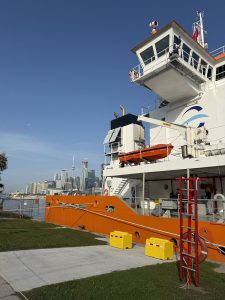
The Port of Toronto handled 2.1 million metric tons of cargo in 2025, a 6% increase over the previous navigation season. Road salt made up the primary cargo, followed by cement and sugar. U.S. tariffs did not impact trade at the port since most cargo imports originate from other Canadian ports or from Central and South America.
Port of Trois–Rivières expects the 2026 navigation season to be comparable to last year. The port handled 2.6 million metric tons of cargo in 2025. Traffic was divided between 1.9 million metric tons of dry bulk, 198,200 metric tons of liquid bulk and 485,000 metric tons of general cargo. The decrease in cargo was expected due to major infrastructure projects underway at the Port of Trois-Rivières.
Feature photo courtesy of HOPA Ports
Editor’s Note: The upcoming issue of Great Lakes/Seaway Review will have additional coverage of the infrastructure investments and improvements taking place at ports along the Great Lakes-St. Lawrence Seaway.

St. Lawrence Seaway Cargo Traffic Rises 3.5% Through September
Cargo traffic on the St. Lawrence Seaway increased 3.5% year over year through September 2026, reaching 24.941 million metric tons, according to year-to-date figures from the St. Lawrence Seaway Management... Read More
Port of Cleveland, Milo Harbour Move Cross-Lake Truck Ferry Project Forward
The Port of Cleveland and Milo Harbour Inc. signed a memorandum of understanding (MOU) in July to initiate a new cross-lake truck ferry service between northeast Ohio and southern Ontario. ... Read More