


General Cargo Down, Grain Trade Up on the Great Lakes in 2025
General cargo, which includes steel shipments, dropped significantly, down nearly 30% to 2.1 million metric tons, likely attributed to U.S. trade tariffs. Dry bulk and liquid bulk showed slight gains, with 2.38% and .61% increases respectively.
The Lake Carriers’ Association reported limestone shipments on the Great Lakes totaled 24.1 million metric tons in 2025, a decrease of 5.9% compared to the previous year. Shipments from U.S. quarries decreased 5% from 2024 to 19.6 million metric tons, while shipments from Canadian quarries totaled 4.4 million metric tons, a 9.7% decrease compared to the previous year.
Overall, 2025 limestone loadings were below the trade’s 5-year average by 6.7%.
Vessel transits on the system were down slightly for 2025, with 3,937 vessels transporting cargo on the system, a .38% decrease from the previous season.
Image: Wilfred Sykes photo courtesy of Lake Carriers’ Association


St. Lawrence Seaway Cargo Traffic Rises 3.5% Through September
Cargo traffic on the St. Lawrence Seaway increased 3.5% year over year through September 2026, reaching 24.941 million metric tons, according to year-to-date figures from the St. Lawrence Seaway Management... Read More
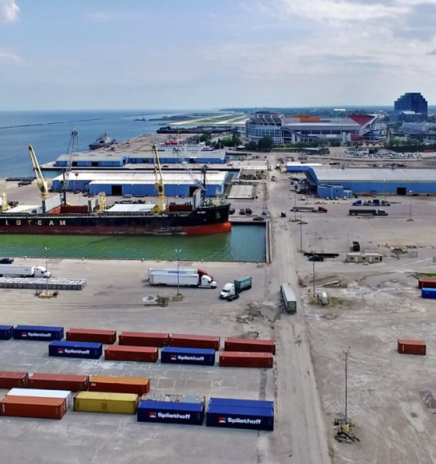
Port of Cleveland, Milo Harbour Move Cross-Lake Truck Ferry Project Forward
The Port of Cleveland and Milo Harbour Inc. signed a memorandum of understanding (MOU) in July to initiate a new cross-lake truck ferry service between northeast Ohio and southern Ontario. ... Read More